Independent public comparison
We asked Bell and Rogers to help a new Ontario customer choose one bring-your-own-device mobile line with about 100 GB, understand the real monthly price and continue to the personal-information boundary. We are not affiliated with either provider. This records the public journeys on 25 September 2026; offers, taxes and eligibility can change.
The Ontario 100 GB BYOD test
Choose one BYOD line with about 100 GB, separate base price from Internet, promotional and automatic-payment discounts, then continue until personal or credit details.
Select 100 GB with U.S. roaming. Headline $55 with Internet bundle, AutoPay and promotional credits; mobility-only builder price $70.
Select 5G+ Essentials BYOD with 100 GB. Mobile-only price $70 after $15 promotional and $5 Auto-Pay credits.
Ontario, one line, new customer, own phone, public Chrome session and no existing Internet relationship assumed.
Bell’s eSIM compatibility step and Rogers’s contact-details checkout. No account, credit check, SIM activation or order was submitted.
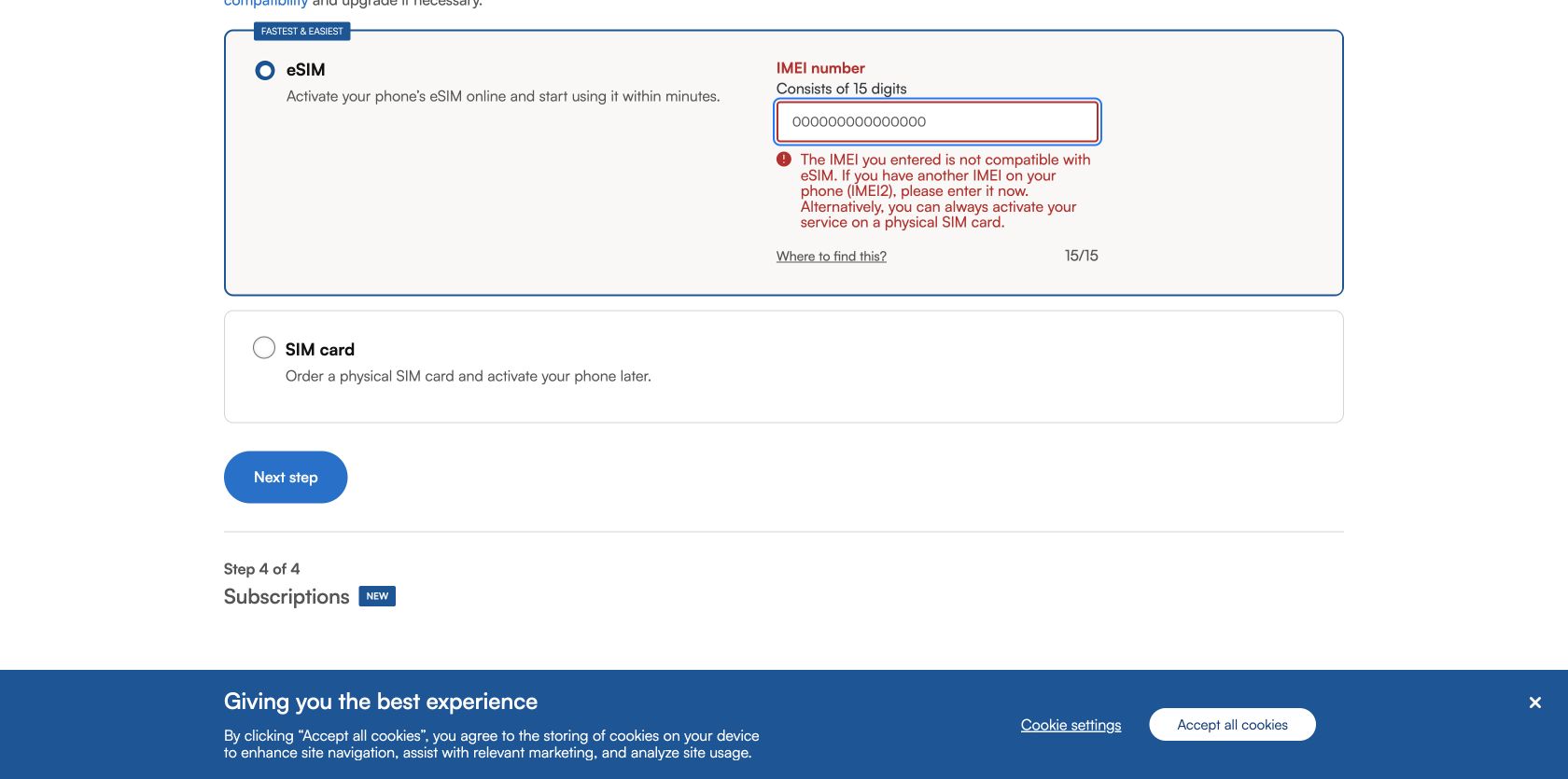
An obviously invalid 15-digit IMEI was used only to test Bell’s reversible compatibility error. No real device or personal data was entered.
The 30-second result
Rogers made the monthly total easier to trust. Bell made the headline price harder to reproduce.
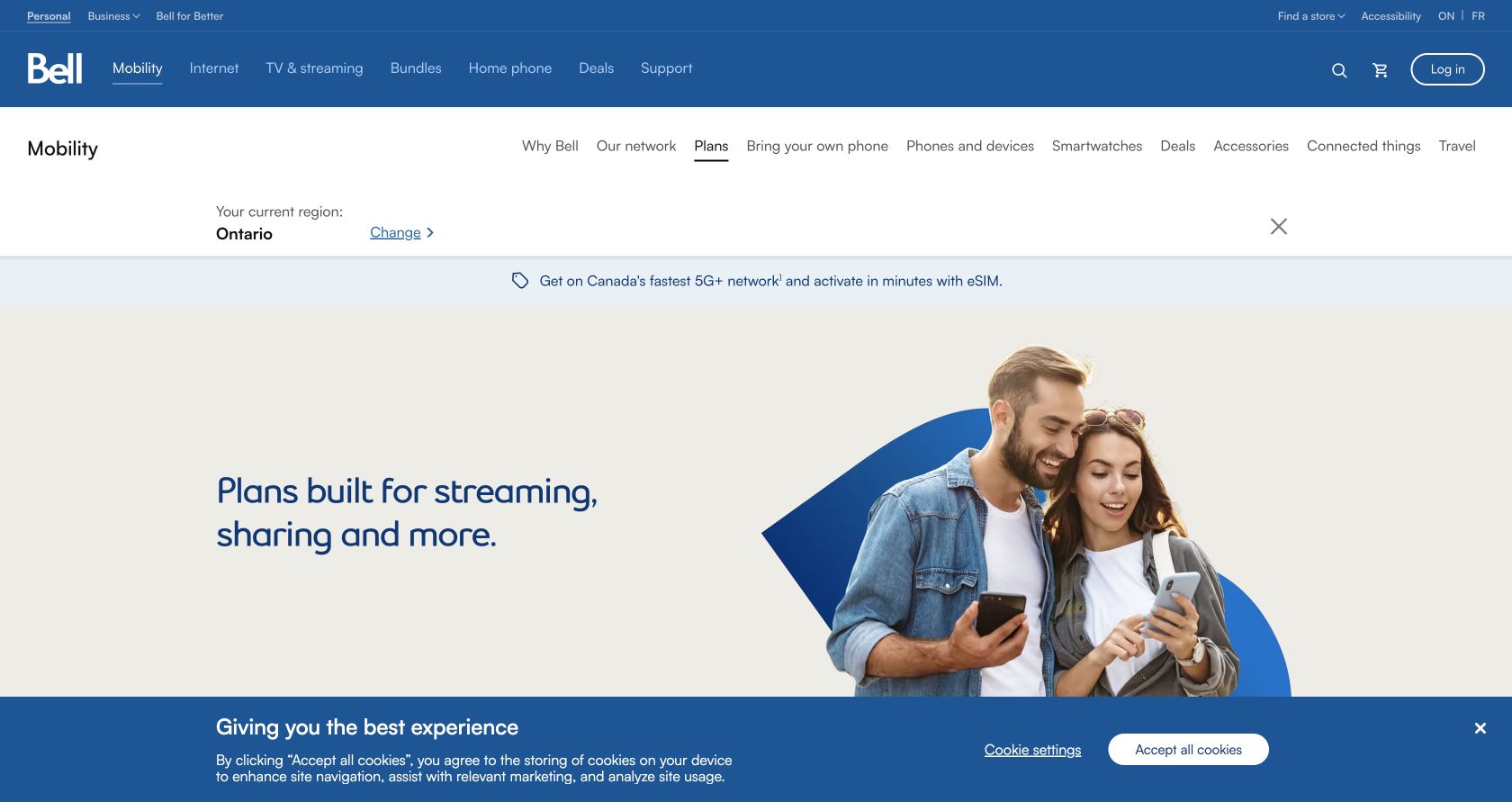
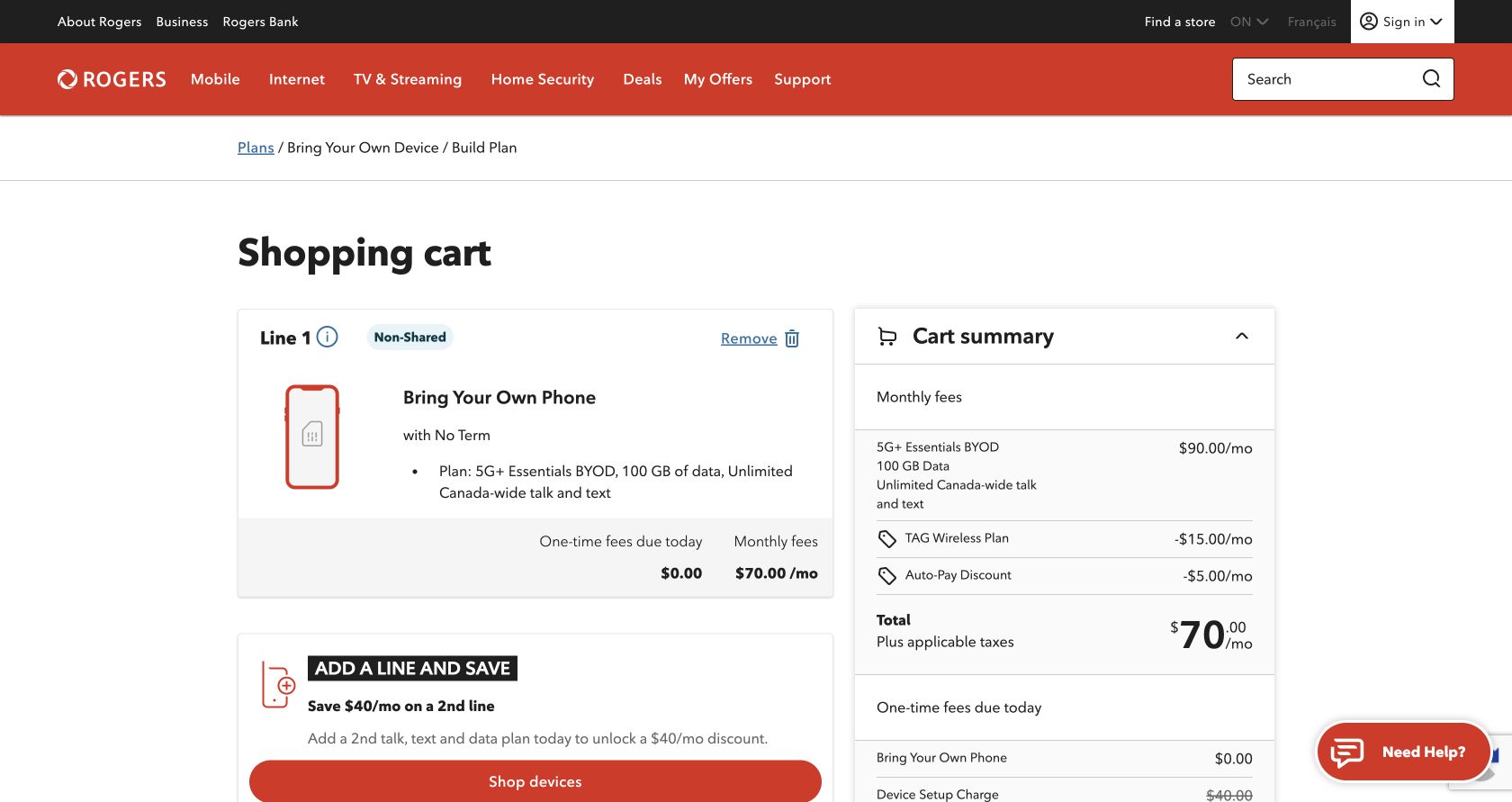
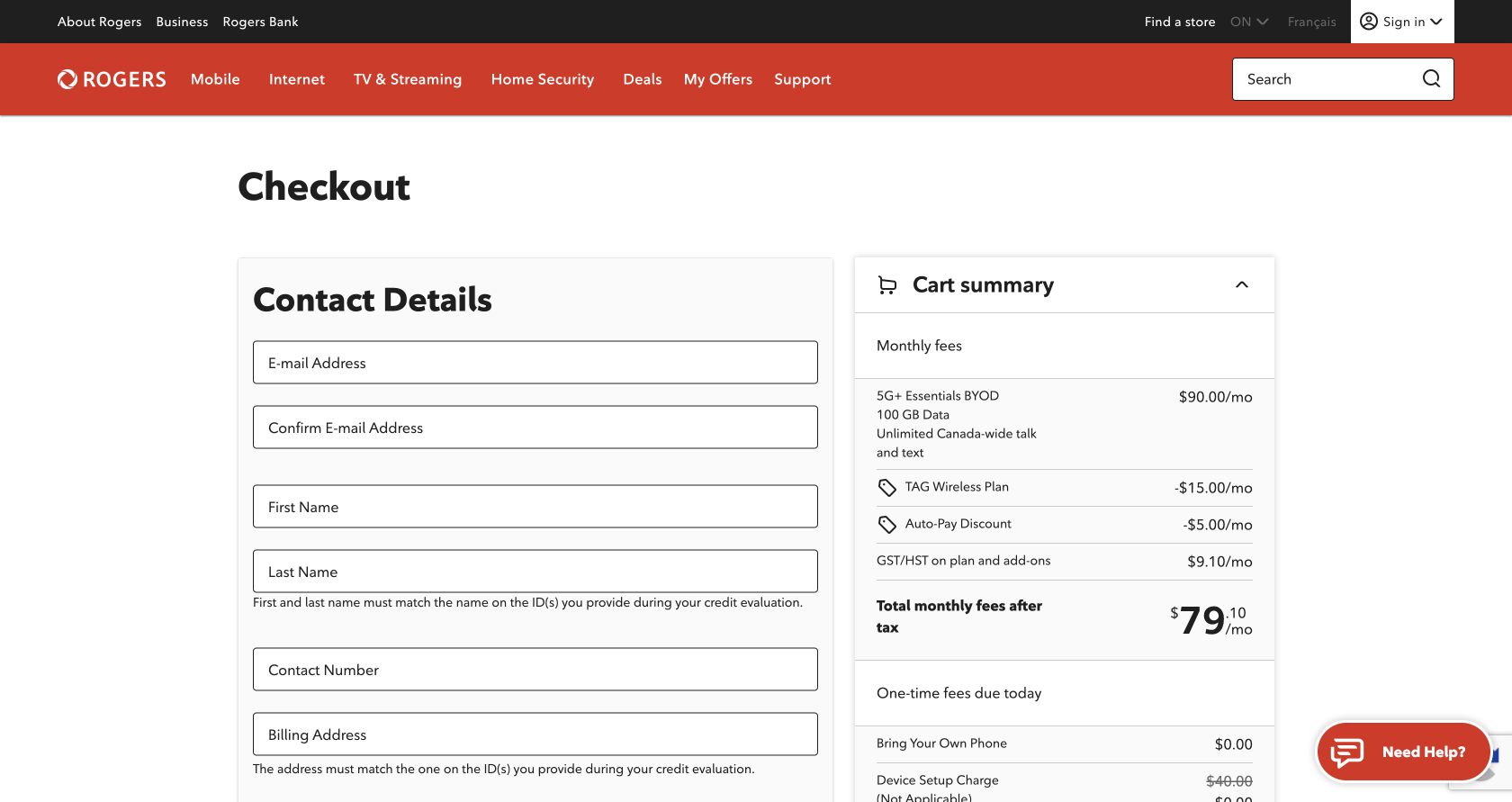
Rogers wins this public journey. Its Mobile Only toggle changed the 100 GB plan from the bundled $55 headline to $70 after Auto-Pay, and its cart itemised the $90 builder price, $15 plan credit and $5 Auto-Pay credit before checkout showed $79.10 after Ontario tax. Bell also landed on $70 for mobility only, but began with $55 and combined Internet, AutoPay and promotional credits in one sentence. A new customer had to pass two chooser modals before the mobility-only builder revealed the applicable amount.
Rogers let the customer remove the Internet assumption in place
Bell’s 100 GB card led with $55 a month against $80 and said the price included Internet bundle, AutoPay and promotional credits. The savings were visible, but not separated. A customer without Bell Internet could infer that the $15 bundle credit did not apply, yet the applicable $70 amount was not presented as the primary answer on the card.
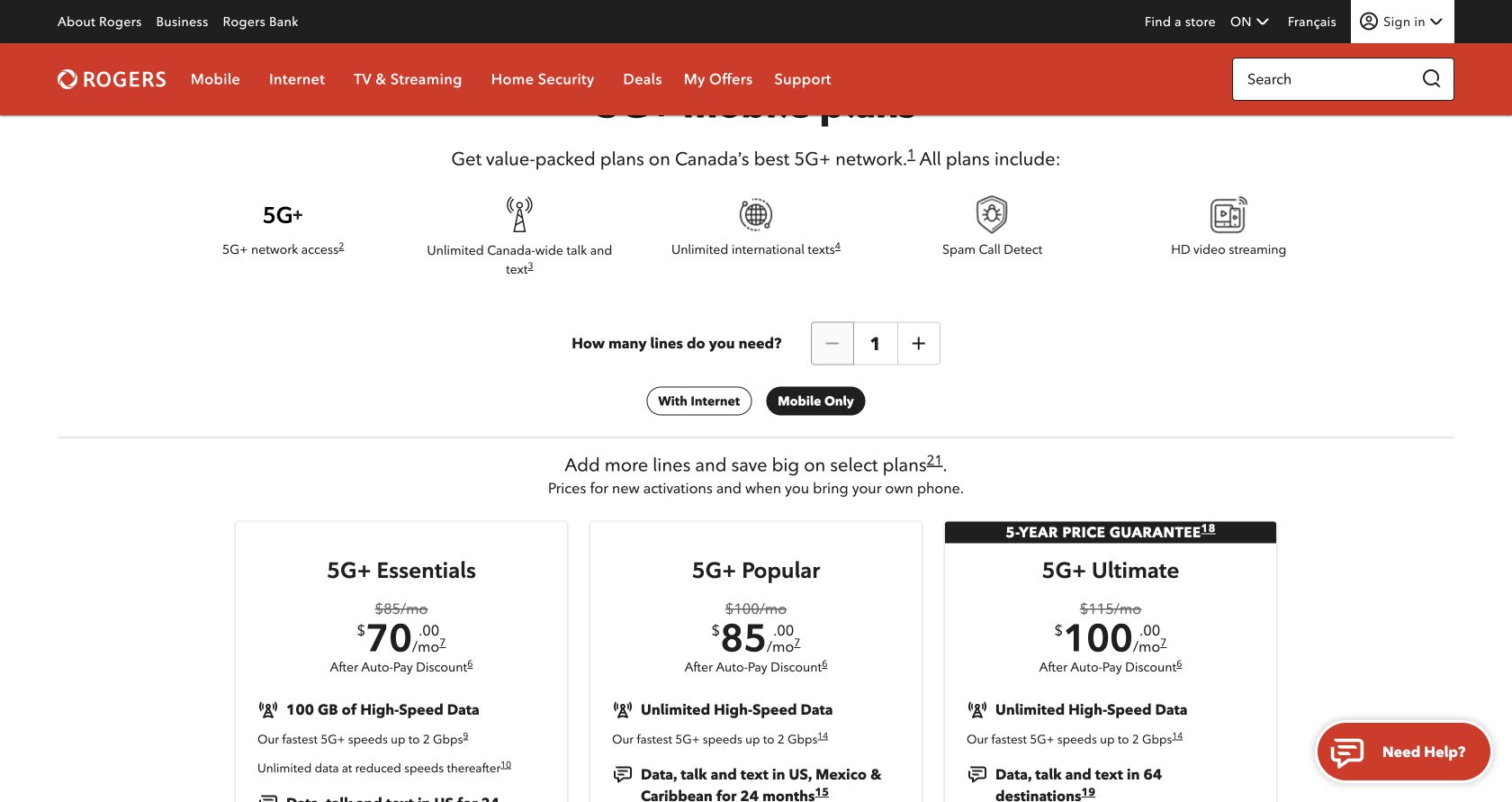
Rogers also started with a bundled view: 5G+ Essentials showed $55 with Internet or TV and Auto-Pay. Its adjacent Mobile Only control changed that same card to $70 after Auto-Pay while preserving the 100 GB allowance and plan benefits. The customer could therefore test the eligibility assumption without leaving the comparison.
Round winner / Rogers
One local control turned the bundle assumption on and off and made the applicable monthly price visible.
Bell revealed $70 after two customer-service choices
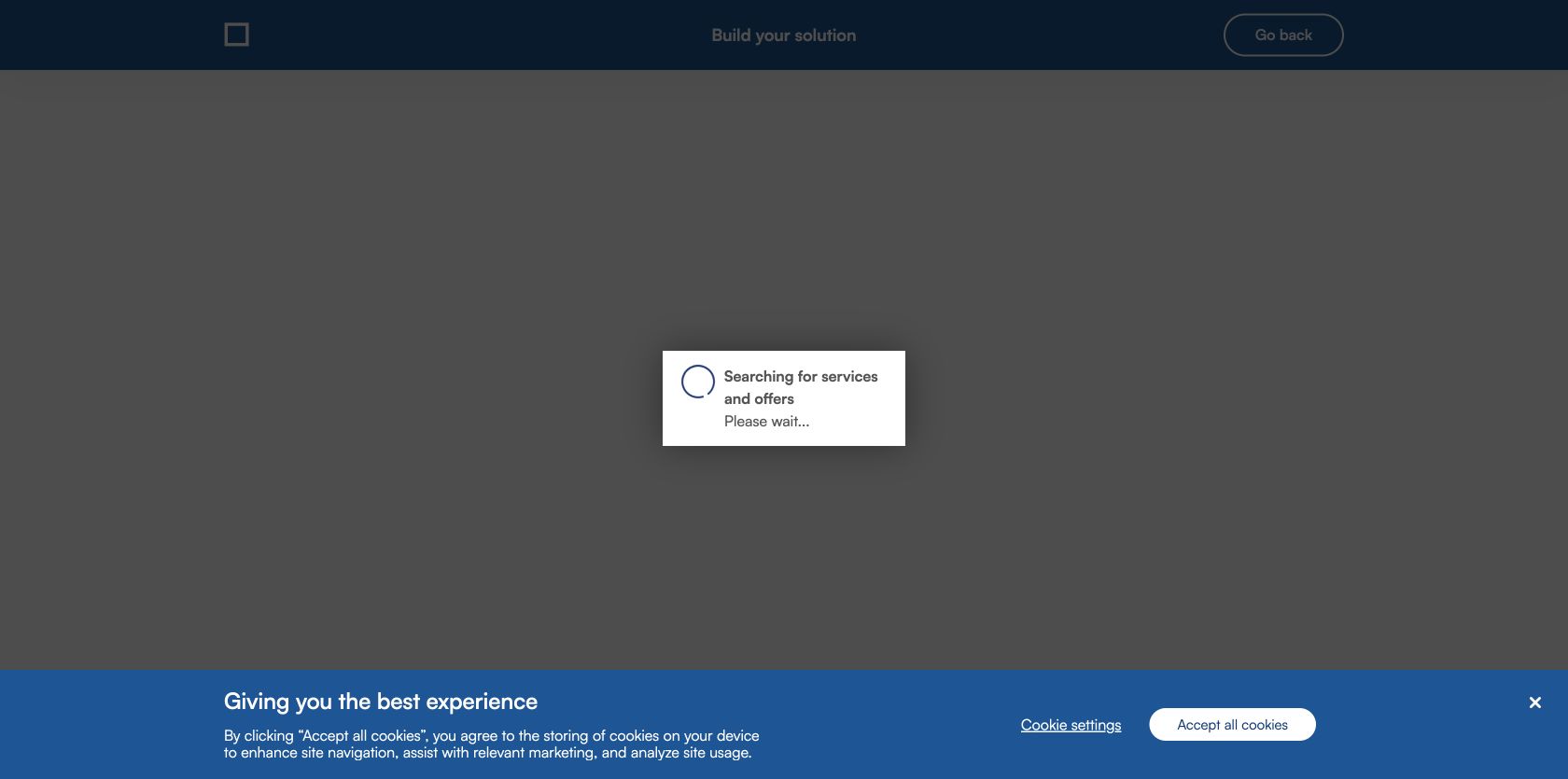
Bell’s Bring your own phone action first asked whether the customer was new or existing. Choosing new opened a second decision between Mobility and Internet or Mobility only. That sequence was logically related to the price, but it delayed the answer. The mobility-only builder then repeated the selected 100 GB plan at $70 a month, followed by add-ons, SIM selection and subscriptions.
Rogers’s builder showed the 100 GB Essentials plan at $70 and named two included offers: a $15 special offer and a $5 automatic-payment bill credit. It also introduced eSIM compatibility as step three of five, then moved the selected plan into a cart without requiring personal details. The page initially included several other plan cards, including a satellite plan, so the customer still had to reselect Essentials inside the builder.
Rogers itemised credits and tax before asking for identity
The Rogers cart named one BYOD line, 100 GB and $70 a month. Its summary showed a $90 plan figure, a $15 “TAG Wireless Plan” reduction and a $5 Auto-Pay reduction. That $90 figure differed from the $85 “price before incentives” on the public plan card, so the naming and basis still need alignment. Crucially, the arithmetic was visible and the cart total remained $70 before tax.
Proceed to Checkout then asked for email, name, contact number, billing address and language. Beside those fields, the cart added $9.10 GST/HST and stated a $79.10 monthly total after tax. It also showed a $40 device-setup charge as not applicable and reduced to $0, plus a free SIM. The Continue action stayed disabled until required contact fields were complete, preventing an empty consequential submission.
Bell’s IMEI error explained the fallback, not just the failure
Bell asked for a 15-digit IMEI when eSIM was selected. We entered an obviously invalid 15-digit value. After verification, Bell stated that the IMEI was not compatible with eSIM, suggested trying IMEI2 and offered a physical SIM as the alternative. The form retained the input and kept both recovery routes in context. This was strong error help at a technically unfamiliar step.
Rogers was materially faster and more stable on the exact plan page
These are 75th-percentile Chrome UX Report results for the exact public plan URLs on phones, collected from 27 August to 23 September 2026. Bell missed every good threshold and was poor for loading and interaction delay. Rogers loaded quickly and did not move unexpectedly, but its 420-millisecond INP still needs improvement. These results cover the plan pages, not the separate builders and checkout pages shown above.
The configured mobile PageSpeed run scored Bell 93 for accessibility and 54 for best practices. It identified an invalid ARIA attribute on the Internet-price toggle, low-contrast price and credit text, a visible-label/accessibility-name mismatch, deprecated APIs, third-party cookies and console issues. Its performance diagnostics included a 2.82-second LCP resource-load delay, long render-blocking styles and a 1.1 MB third-party chat widget with substantial unused code. The equivalent configured Rogers request timed out after 120 seconds without returning audit data, so no Rogers lab score is reported. The successful exact-URL field record remains available.
All ten Nielsen usability heuristics
Keep the applicable price, credits and step visible.
Rogers itemised its total through cart and checkout. Bell delayed the mobility-only price until the builder.
Say what this customer pays.
Rogers’s Mobile Only view matched the stated scenario; Bell foregrounded a price that assumed Internet.
Let customers switch eligibility assumptions in place.
Rogers’s two-state control was faster than Bell’s modal sequence.
Use one base price and one credit name.
Rogers showed $85 before incentives on the plan page and $90 in the builder/cart.
Disable consequential progress until required fields are complete.
Rogers did this at contact details; Bell verified IMEI before advancing.
Keep every discount beside the total.
Rogers’s cart showed each credit. Bell grouped three conditions into one line on the plan card.
Support mobile-only shoppers directly.
Bell’s two service-choice modals added decisions that Rogers handled with a toggle.
Keep the plan builder focused on the selected plan.
Rogers repeated multiple plan cards; Bell separated add-ons and SIM clearly after selection.
Offer a meaningful technical fallback.
Bell’s incompatible-IMEI message suggested IMEI2 and physical SIM rather than a generic failure.
Explain tax, fees and credit conditions before identity.
Rogers came closest by carrying the calculation into checkout.
What we would change first
Make mobile-only pricing a first-class state.
What
Add a persistent Internet bundle / Mobile only switch and show each credit separately.
Where
Above the public plan cards and inside each price block.
Why
The observed $55 headline became $70 only after two chooser modals.
Measure
Price-state changes, modal exits and plan-to-builder progression.
Use one base price and one promotion label end to end.
What
Align the $85 public-card basis with the $90 builder/cart basis and replace internal-sounding credit labels.
Where
Plans, BYOD builder, cart and checkout summary.
Why
The final arithmetic was transparent, but the starting figure changed.
Measure
Price-detail opens, backtracking, support contacts and cart completion.
Investigate the exact page’s long interaction delay first.
What
Profile the price toggle, cards, chat widget and modal handlers; defer non-critical third-party work and reduce render-blocking styles.
Where
The exact Cell Phone Plans template.
Why
Phone INP was 870 milliseconds and LCP was 5.32 seconds at p75.
Measure
p75 INP and LCP alongside plan selection and builder progression.
Preview SIM and credit requirements before the builder.
What
Summarise eSIM compatibility, physical-SIM fallback and credit-check timing beside Get plan.
Where
The public 100 GB plan cards and entry modal.
Why
Both introduce technically or financially consequential requirements after selection.
Measure
Builder exits at SIM checks, fallback choice and checkout progression.
What this public comparison cannot see
We did not submit identity, address or credit information, activate a SIM, port a number, accept terms or place an order. Eligibility, final promotions, credit outcomes, number transfer, activation and post-sale support are outside this test. The invalid IMEI was deliberately non-real and was used only to inspect the reversible error state.
Public testing cannot reveal subscription completion or retention. With consented analytics, the next comparison would connect pricing-state changes, plan selection, SIM recovery, credit-check starts and completed activations by device and customer relationship.