Independent public comparison
We asked ASOS and Next to find a men’s white, 100% cotton Oxford shirt in Medium, add it to the bag and continue towards checkout in the UK. We are not affiliated with either retailer. This records the public journeys on 25 September 2026; stock, offers and delivery terms can change.
The white Oxford shirt test
Find a men’s white 100% cotton Oxford shirt, choose Medium, confirm price and delivery, add one to the bag and reach the account or checkout boundary.
Selected 100% Cotton Oxford Long Sleeve Shirt in White, £50, size Medium.
White Regular Fit Oxford Long Sleeve Shirt, £28, size Medium.
United Kingdom storefront and prices in pounds. Public browser session, not signed in.
ASOS’s guest-checkout email gate and Next’s sign-in or registration gate. No account, address, payment or order was submitted.
Add without size, correct an accidental bag quantity, and submit an empty account-entry form where reversible.
The 30-second result
ASOS got closer to payment. Next made the product decision easier.
ASOS narrowly wins the complete journey because it offered a guest route after asking for an email address. Next’s £28 shirt was easier to verify as 100% cotton, the size error was prevented, and an accidental quantity of three was simple to correct without losing Medium. But Checkout led directly to Sign In / Register with no guest option. ASOS’s £50 product page and bag communicated delivery and a one-hour hold, yet an Australia-specific free-delivery message appeared inside the otherwise UK journey and weakened confidence.
ASOS narrowed the range; Next exposed a much larger shelf
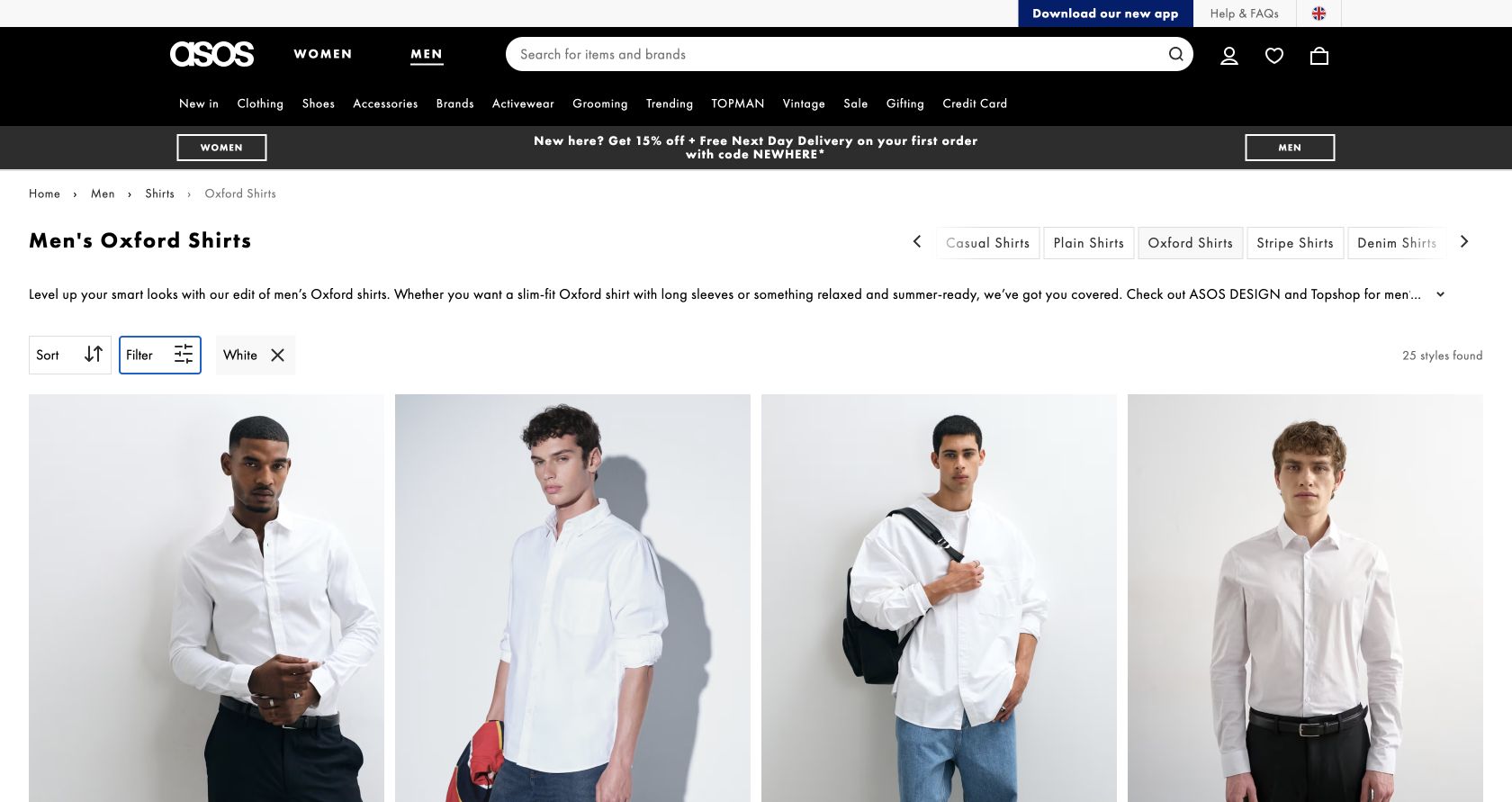
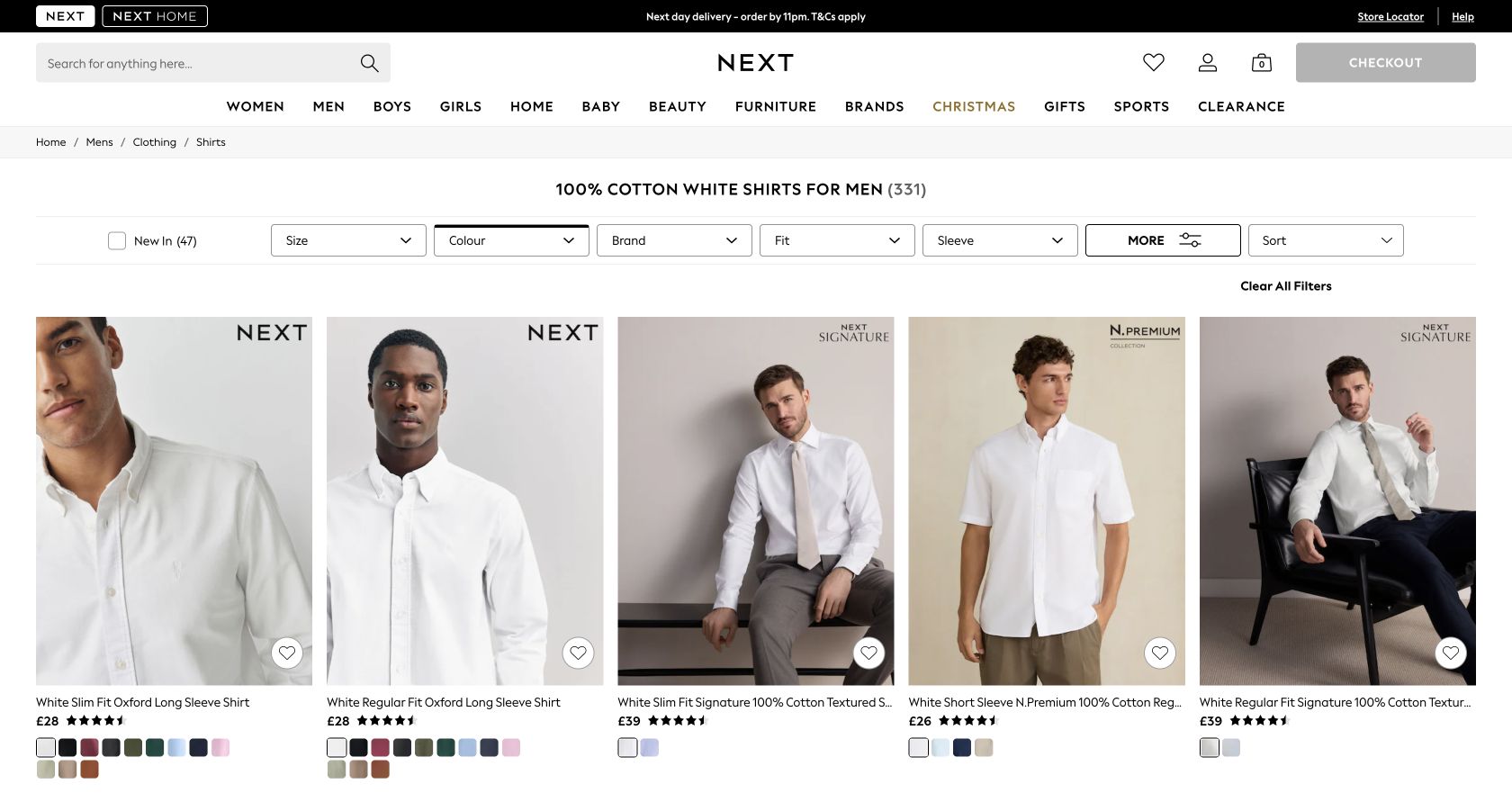
ASOS’s Oxford-shirt category, filtered to white, returned 25 styles. That was a manageable set, and the selected card named 100% cotton before the customer opened it. Next’s white, 100% cotton shirt route returned 331 results and offered Size, Colour, Brand, Fit, Sleeve and More filters. The first rows contained several plausible Next-branded Oxford shirts, but the volume made the query feel broader than the criteria suggested.
Next answered material, fit and size with less qualification
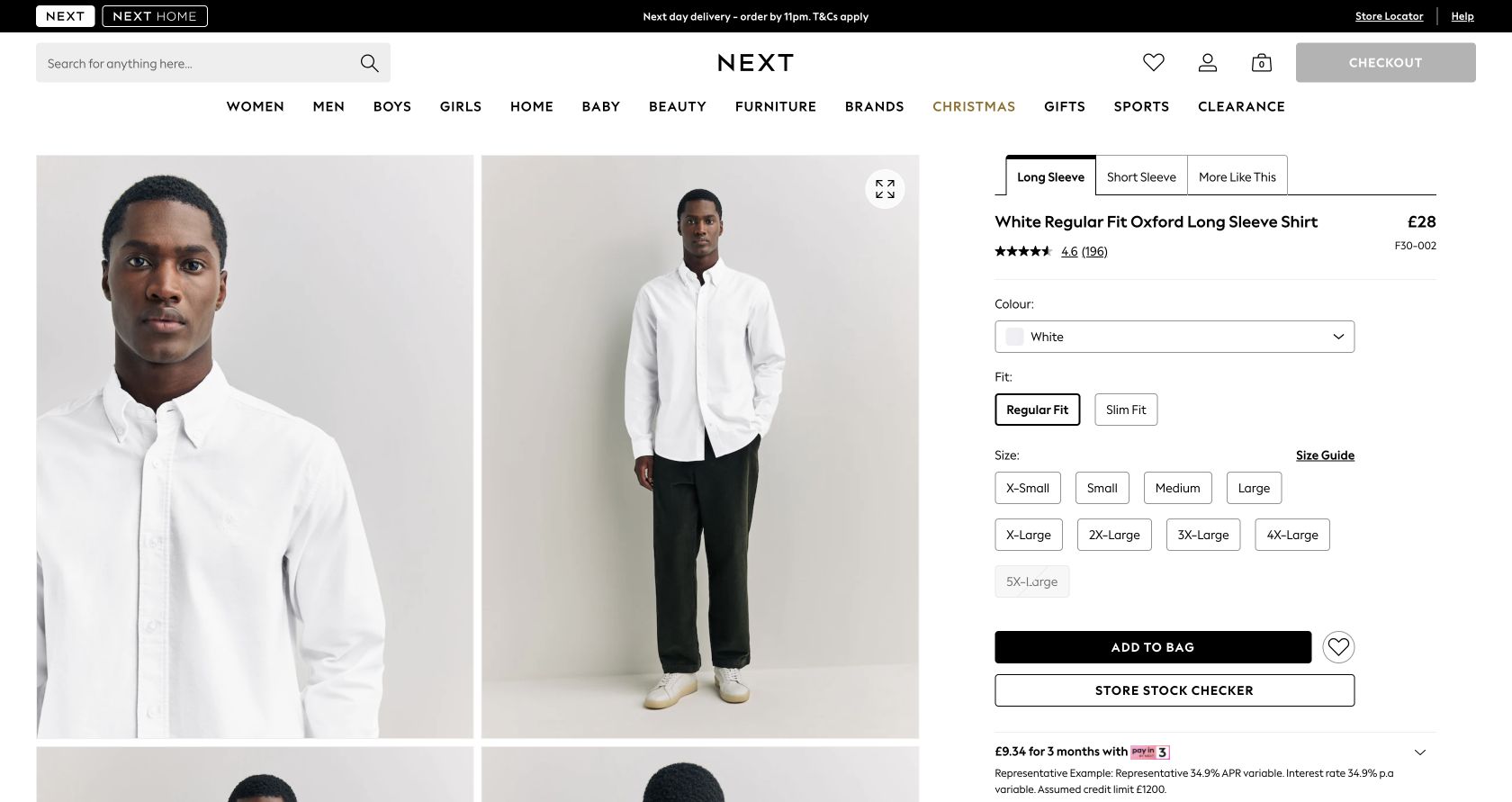
Next’s £28 product page named Regular Fit, offered a Slim Fit alternative and listed sizes from X-Small to 5X-Large. Its description stated that the shirt used a mid-weight fabric and gave the composition as 100% organic cotton for the main fabric and 100% cotton trim. The information matched the search task closely.
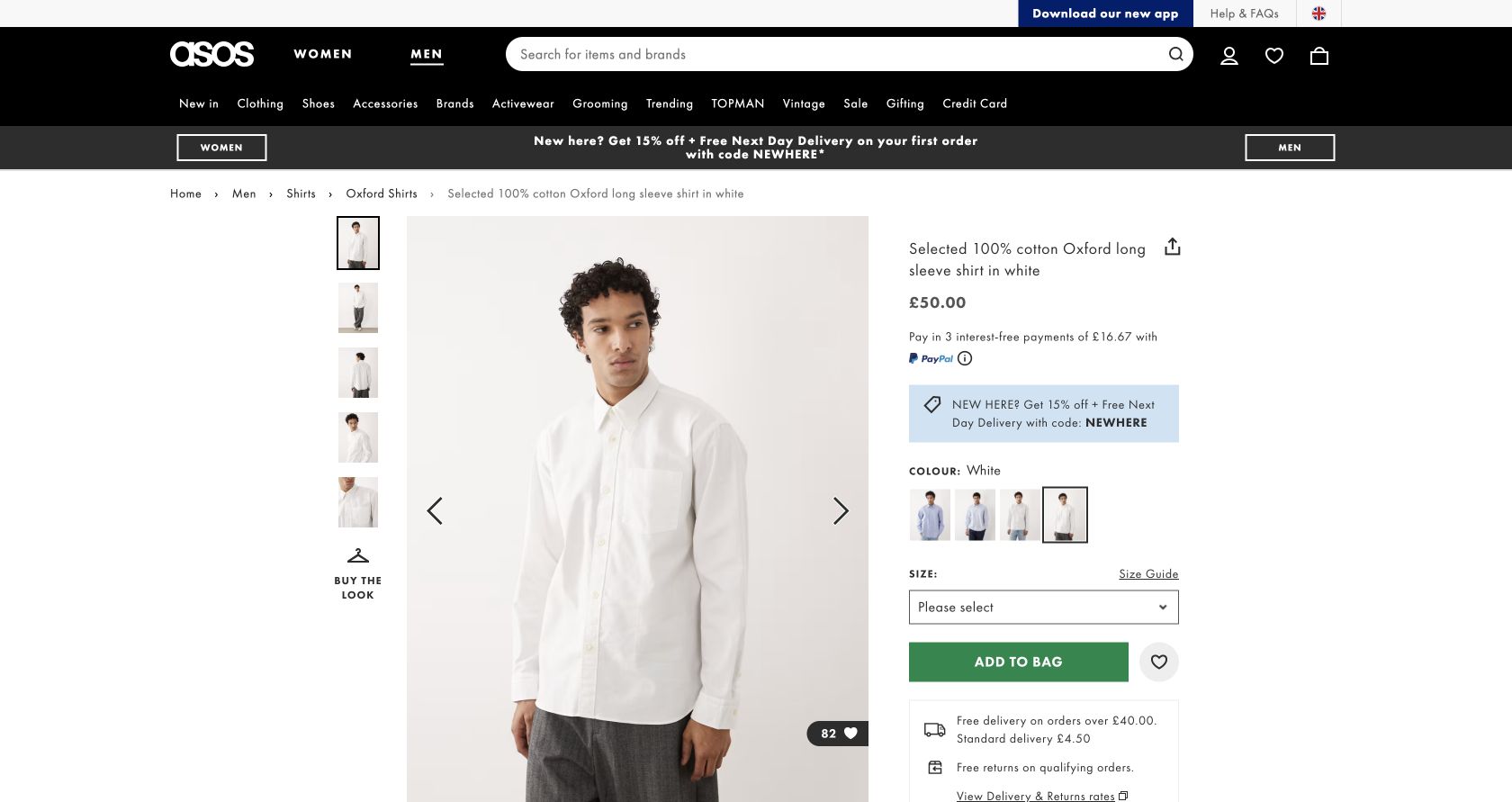
ASOS’s £50 product also made Medium available and showed that the model wore Medium. It placed free delivery over £40 beside the product and stated that standard delivery was £4.50. A prominent new-customer offer promised 15% off and free next-day delivery, but depended on marketing opt-in, a maximum spend and country exclusions. Those conditions made the apparent saving more expensive to evaluate than the shirt.
Round winner / Next
The product matched the brief at a lower price and kept composition, fit and size easier to verify.
Both prevented a size-less order; Next recovered the quantity cleanly
Choosing Add to bag before a size on ASOS produced “Please select from the available colour and size options” beside the control. Next responded with “To continue, please complete your selection.” Both kept the customer on the product page and made Medium selectable without discarding context.
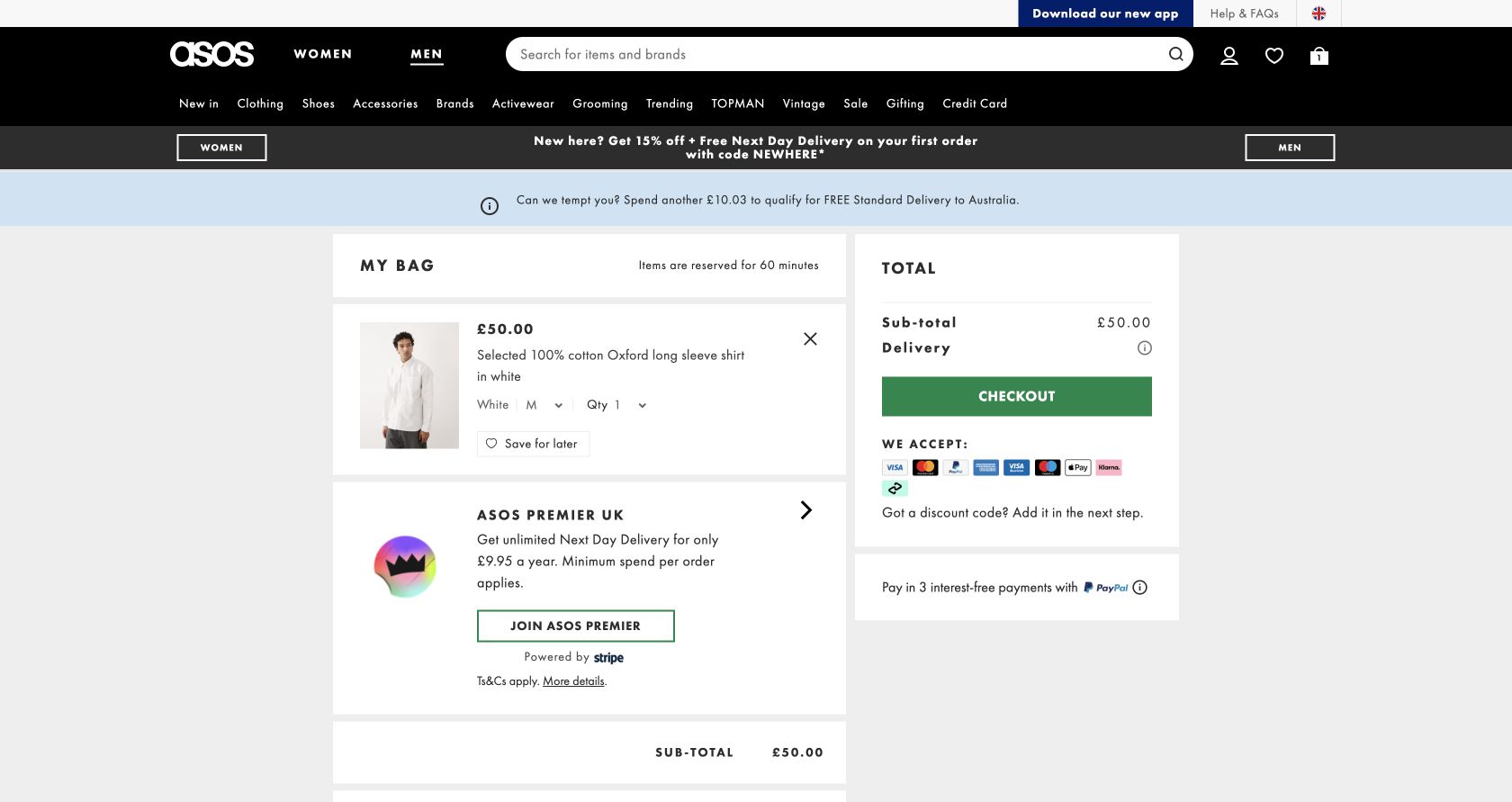
ASOS then held the item for one hour and kept the £50 subtotal visible. Its bag promoted a £9.95-a-year Premier subscription and cross-sold other products. More seriously, the UK journey displayed “Spend another £10.03 to qualify for FREE Standard Delivery to Australia” in the observed bag. The rest of the session used the UK market, so this location-specific contradiction made the delivery promise hard to trust.
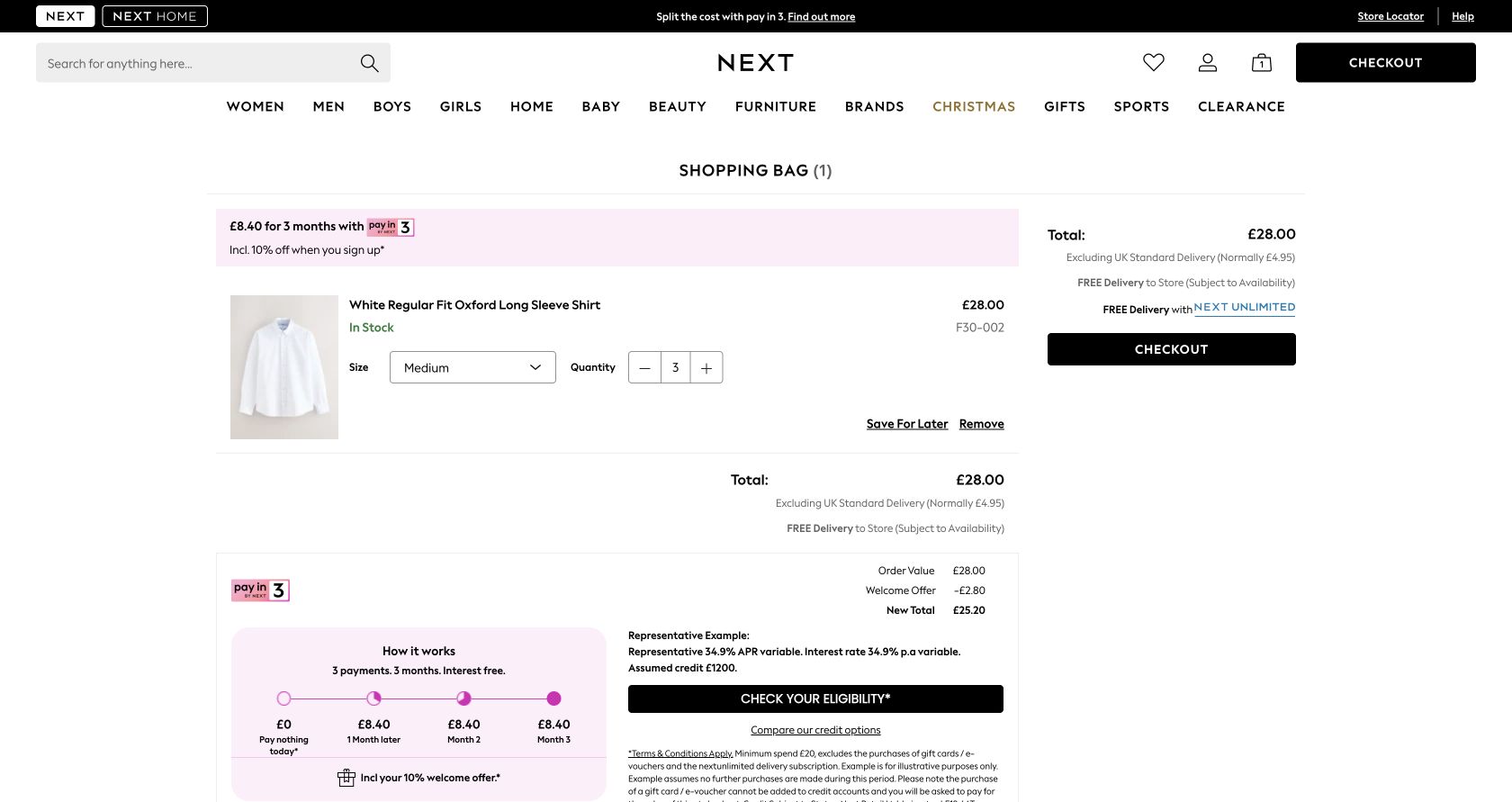
Repeated Add interactions left three Next shirts in the bag, a useful reversible recovery test. Changing Quantity from three to one retained Medium and updated the total from £84 to £28. The bag also exposed normal UK standard delivery at £4.95 and free store delivery. A credit promotion displayed a 10% welcome offer and pay-in-three illustration, but it did not obscure the product subtotal.
ASOS offered guest checkout; Next required sign-in or registration
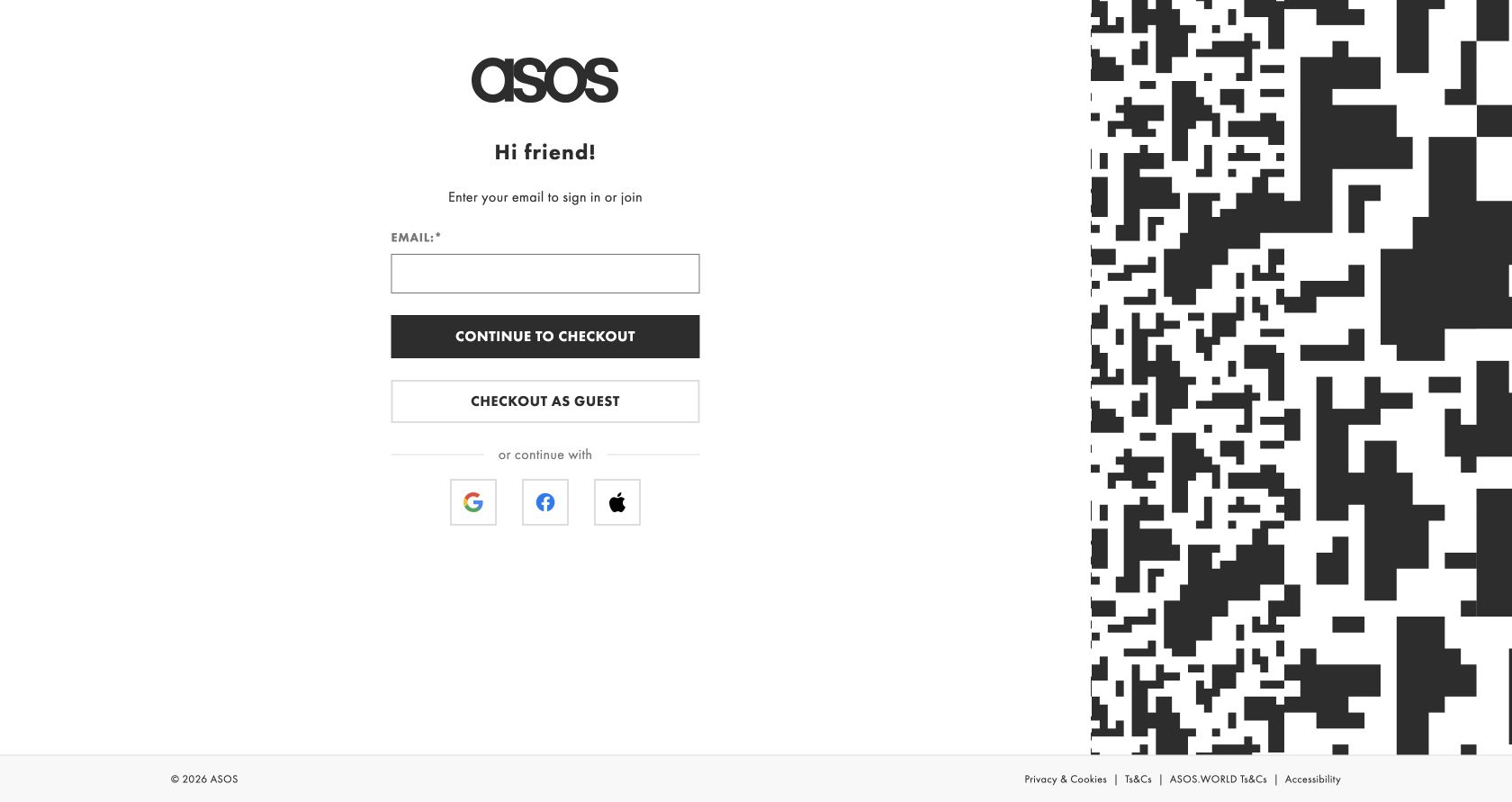
ASOS’s checkout entry asked for an email address, then offered Checkout as guest alongside account and social-sign-in routes. Submitting the guest action without an email produced the clear inline message “Oops! You need to type your email here.” We stopped there. The guest route still requires contact data, but it does not require an account decision before the customer can continue.
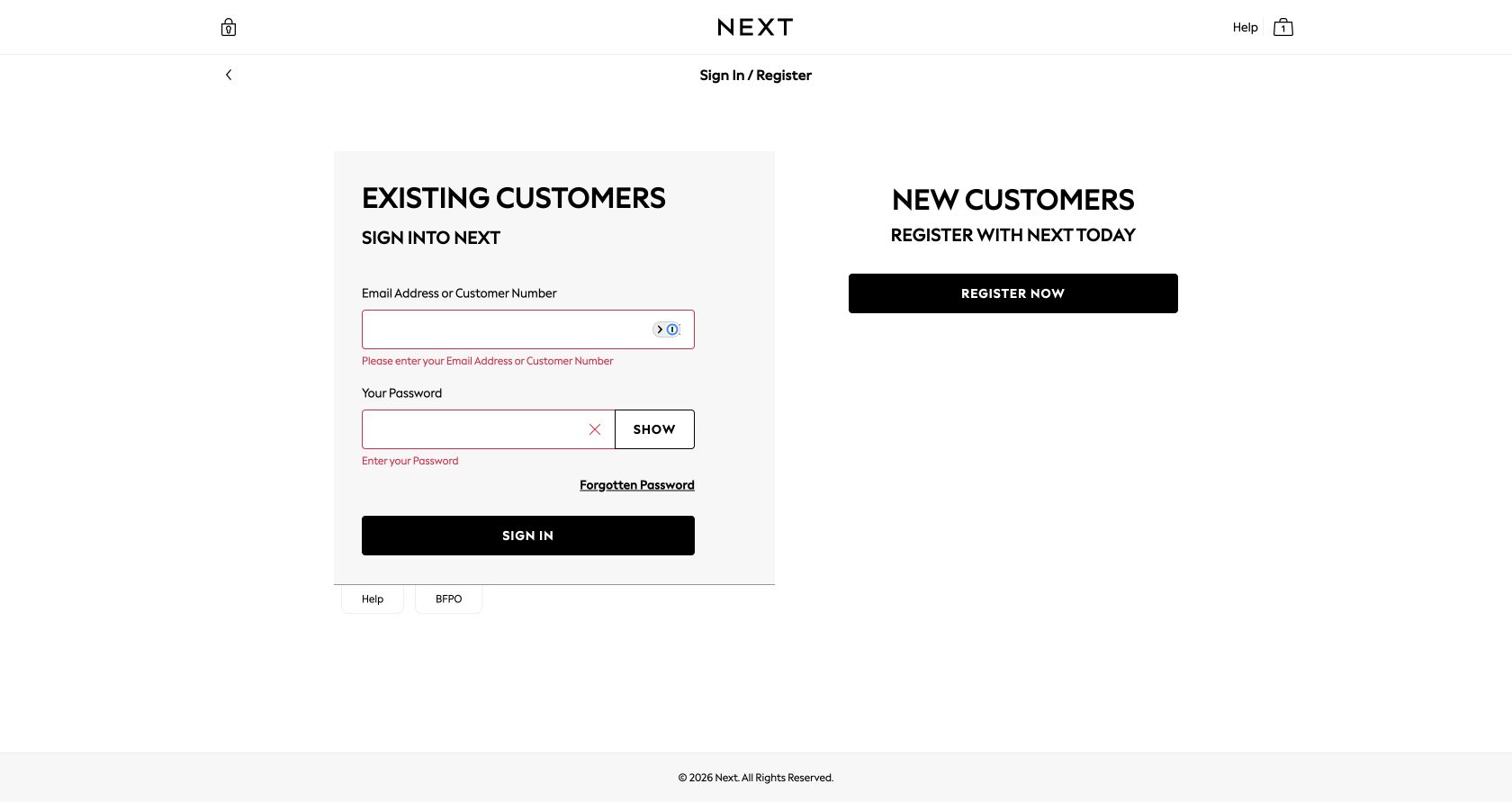
Next’s Checkout action opened Sign In / Register. Existing customers needed an email or customer number and password; new customers were offered Register Now. No guest checkout was visible. An empty Sign In submission returned specific messages for both missing fields, so the form recovery was clear even though it served the wrong path for a customer avoiding account creation.
Both loaded quickly in field data; Next interactions were the larger risk
The ASOS exact product URL did not return an eligible Chrome UX Report record, so its figures are whole-origin results for www.asos.com. Next’s figures are for the exact product URL. Both cover 27 August to 23 September 2026 and report the 75th percentile on phones. The loading and layout results were good; ASOS’s origin INP needs improvement, while Next’s exact-page 559-millisecond INP is in the poor range. The different scopes mean the numbers should guide investigation, not serve as a direct page race.
The configured mobile PageSpeed run scored ASOS 100 for accessibility and 73 for best practices. It identified a visible-label/accessibility-name mismatch, third-party cookies, console and inspector issues, render-blocking styles, duplicate and unused JavaScript and an unsized image. Next scored 83 and 96; its run identified focusable descendants inside hidden content and the absence of a main landmark. A 4.67-second element-render delay dominated its lab LCP breakdown, with forced reflow, render-blocking work and unused code also named. These automated findings are leads for manual verification, not accessibility certification.
All ten Nielsen usability heuristics
Keep market, stock and bag state trustworthy.
ASOS showed a one-hour hold, but the Australia message contradicted the UK session. Next updated quantity and total clearly.
Describe fabric and fit in shopping language.
Next’s mid-weight, regular-fit and composition details mapped neatly to the task.
Do not make an account the price of checkout.
ASOS retained a guest path. Next required sign-in or registration.
Keep country and delivery promises aligned.
ASOS’s Australia threshold was inconsistent with the selected UK market.
Block Add until required variants are selected.
Both surfaced an immediate size prompt and preserved the product context.
Keep material, fit, size and delivery beside the action.
Next concentrated product facts particularly well; ASOS added useful delivery context.
Make a known-item search genuinely narrow.
ASOS’s 25 styles were easier to review than Next’s 331-result shelf.
Keep acquisition and credit offers secondary.
Both added offers; neither should make the shirt price harder to evaluate.
Preserve size when quantity changes.
Next handled the three-to-one correction without losing Medium.
Explain delivery qualification locally.
ASOS named its standard fee and threshold; Next named store delivery and the standard UK fee.
What we would change first
Add a genuine guest-checkout path.
What
Allow email-led guest continuation and offer account creation after purchase.
Where
After Checkout from the shopping bag.
Why
The observed journey forced Sign In or Register before customer details.
Measure
Bag-to-checkout progression, registration exits and completed guest orders.
Derive every delivery promise from one market state.
What
Use the selected storefront and destination consistently, and suppress stale country thresholds.
Where
The bag qualification message and delivery estimator.
Why
A UK session displayed an Australia free-delivery threshold.
Measure
Country-message mismatches, delivery-help opens and checkout exits after bag view.
Reduce interaction delay on the exact product template.
What
Profile size selection, gallery and bag updates; split non-critical bundles and remove long render work.
Where
The tested product page and shared PDP runtime.
Why
Exact-page phone INP was 559 milliseconds at p75 and the lab run recorded a 4.67-second render delay.
Measure
p75 INP alongside size-selection, add-to-bag and checkout progression.
Show how every result satisfies the material brief.
What
Expose material percentage and fit on cards and provide a strict-match result count.
Where
The white Oxford shirt category and filter summary.
Why
The customer should not need to open hundreds of products to verify 100% cotton.
Measure
Product opens per purchase, filter changes and category-to-bag progression.
What this public comparison cannot see
The two shirts differ in brand, cut and price, so this is a shopping-journey comparison rather than a quality verdict. We stopped before address, delivery selection, payment and order submission. We did not test returns, refunds, parcel tracking, account recovery or whether promotional discounts would apply to this basket.
Public testing cannot reveal conversion. With consented analytics, the next step would measure strict-filter use, product-to-bag progression, quantity corrections, account-gate exits, delivery-message interactions and completed orders by device.